
Postural support
Many people with disabilities and medical conditions require additional postural support to travel comfortably and safely in motor vehicles
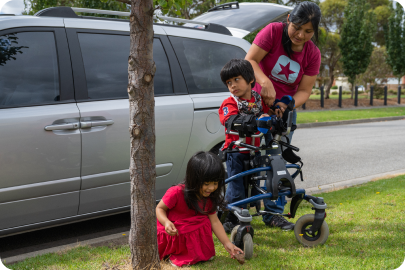
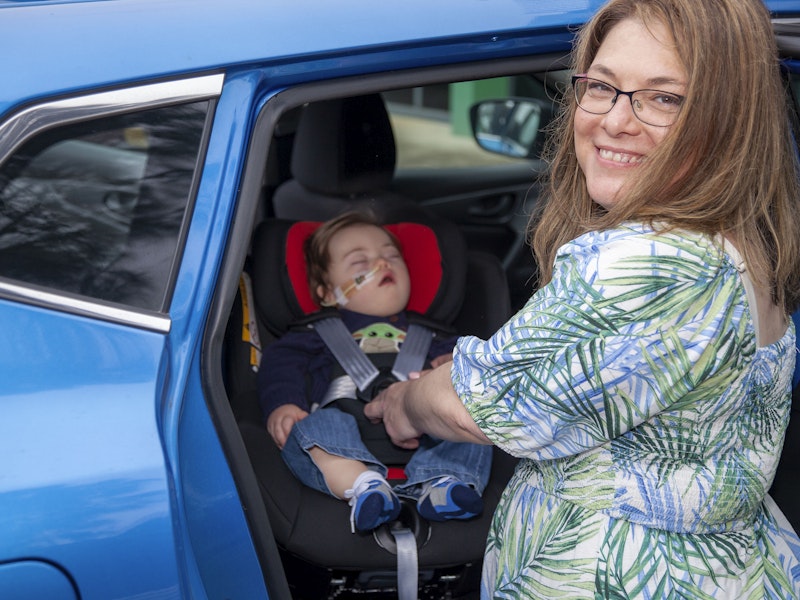
Chris shares her family's story
Jerome was finding travel in the car increasingly difficult due to his postural support needs. Chris shares her story of finding comfort and safety for Jerome and the family.

Planning for a person's postural support
Many children and adults with disability or medical conditions need extra postural support to travel safely and comfortably in a motor vehicle.
Postural support needs can affect the head, trunk, pelvis, arms or legs. A person’s needs may also change over time because of growth, fatigue, pain, surgery, changes in health or mobility, or increasing use of a wheelchair.
It is helpful to assess postural support needs early. Planning ahead can help families and carers avoid reaching a point where the current transport arrangement is no longer suitable.
Depending on the person’s needs, different strategies and vehicle restraint types may be considered. These can include features available in Australian standard car seats, special purpose car seats, specialty harness/vests, as well as other supports identified through assessment.
A person’s transport needs should be reviewed over time, particularly when there are changes in growth, function, health, mobility, vehicle access or transfer needs.
Case studies
FAQs



Contact us
Our team is always here to provide help and support.

