Assessment & Results
Learn about the assessment and results of AuSAP
Assessments
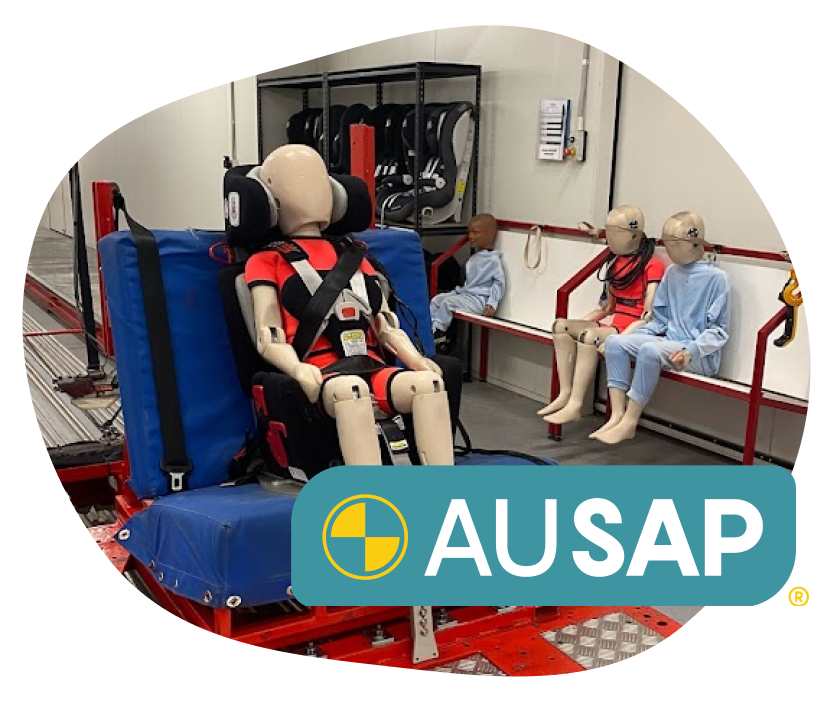
AuSAP's scope includes special purpose car seats and lie flat child restraints. Related research has investigated modified Australian Standard child restraints and specialty harnesses and vests.
To date, more than 240 tests and assessments have contributed to AuSAP's evidence base. This includes 103 research crash tests undertaken through a NeuRA PhD program investigating modified Australian Standard child restraints and specialty harnesses and vests.
Protocol development
The development of the AuSAP Test and Assessment Protocol involved extensive research and investigation over nearly 12 months (2020/21).
The Expert Committee investigated relevant Australian and overseas standards (and test methods), including from Europe, Canada, USA, China, Brazil and Japan.
The project team also undertook a desktop review of the various independent child restraint assessment programs in Australia and internationally and found that no program includes specialty vehicle restraint systems. Further a literature search identified limited research about specialty vehicle restraint products and methods for safety and performance testing.
The Expert Committee agreed side impact testing was important and that either ECE r129 or AS/NZS 1754 be considered. In recognition that all mainstream child restraint systems in Australia comply with AS/NZS 1754, and that it is widely recognised as one of the most rigorous child restraint standards, it was chosen.
The AuSAP Test and Assessment Protocol was developed using selected criteria (frontal and side impact) from AS/NZS 1754:2013.

Product inspections
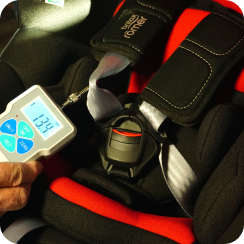
As well as frontal and side impact crash tests, the AuSAP Test and Assessment Protocol includes a limited assessment of design features. This includes a hands-on assessment to identify and evaluate potential sources of risk not covered by dynamic assessments, and any potential issues that may pose challenges to set-up – for example, foot props, double top tether connectors, adjustable sash guides.
Post-test reviews are also conducted to examine and document outcomes from the dynamic testing, particularly where components fail.
Testing facilities
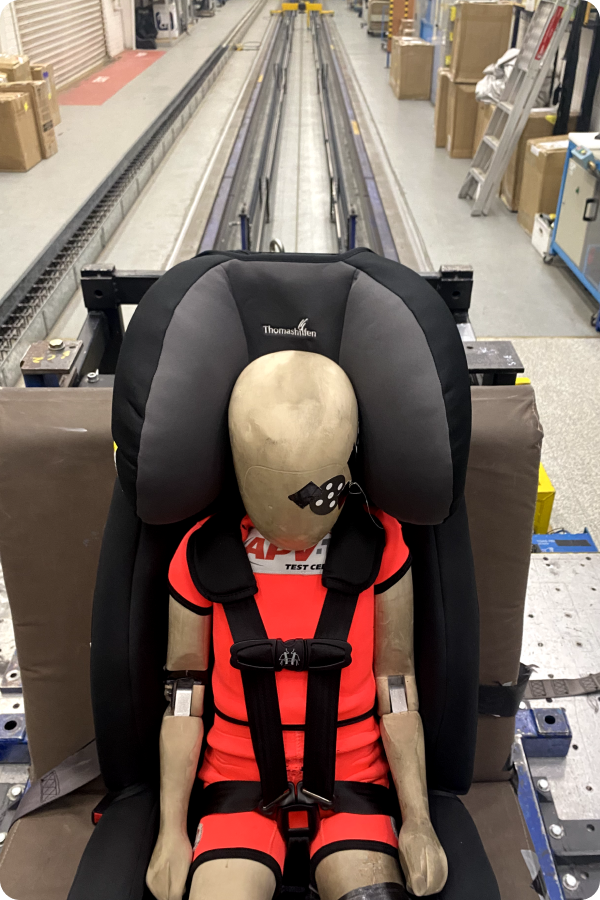
Several test facilities in Australia were investigated to determine suitability for AuSAP testing.
This included:
- Crashlab, NSW Centre for Road Safety, Sydney
- Britax Childcare Pty Ltd (Britax) – Crash Test Facility in Sunshine West, Melbourne, Victoria
- APV-T Test Centre in Campbellfield, Melbourne, Victoria
- Neuroscience Research Australia (NeuRA), Transurban Road Safety Centre, Randwick, NSW
As a result of this review both NeuRA (Transurban Road Safety Centre) and Britax Childcare Pty Ltd offered to support AuSAP crash testing in-kind.
The first AuSAP crash testing program, involving 15 special purpose car seats, was undertaken from June 2021 until August 2022. The testing took place at Britax, NeuRA and the APV-T Test Centre.
More recently Transport for NSW (Safer Vehicles and Crashlab) has offered support with the first tests undertaken early 2025.
Learn about the crash tests and results
To date 240 ssessments, have been completed, involving 40 products. This includes tests undertaken as part of NeuRA PhD research.